Quaid-e-Azam Muhammad Ali Jinnah
Founder of Pakistan - 1876-1948
"With faith, discipline and selfless devotion to duty, there is nothing worthwhile that you cannot achieve."
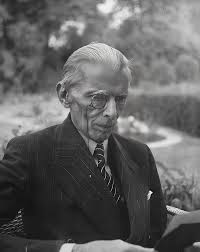
Quaid-e-Azam Muhammad Ali Jinnah
Founder of Pakistan - 1876-1948
"With faith, discipline and selfless devotion to duty, there is nothing worthwhile that you cannot achieve."
Muhammad Ali Jinnah was born on December 25, 1876, in Karachi, which was then part of British India. He was born into a prosperous merchant family belonging to the Khoja community of Shia Muslims. His father, Jinnahbhai Poonja, was a successful merchant, and his mother, Mithibai, was a homemaker. Jinnah was the second of seven children.
Jinnah received his early education at the Sindh Madrasatul-Islam in Karachi (now known as Sindh Madressatul Islam University). He later attended the Christian Missionary Society High School in Karachi, where he excelled in his studies. Even at a young age, Jinnah displayed remarkable intelligence and a strong sense of discipline.
During his formative years, Jinnah was influenced by his father's business acumen and his mother's emphasis on education and moral values. The diverse cultural environment of Karachi, a bustling port city, exposed him to various communities and ideas, which would later shape his political outlook.
At age 16, Jinnah traveled to London to join Lincoln's Inn for legal studies. His decision to study law was influenced by his admiration for British legal systems and his desire to pursue a prestigious career. During his time in London, Jinnah immersed himself in British culture, politics, and legal traditions.
After completing his legal education, Jinnah returned to India in 1896 and began practicing law in Bombay (now Mumbai). He quickly established himself as one of the most prominent lawyers in the country, known for his sharp intellect, meticulous preparation, and persuasive arguments in court.
Jinnah's political career began in 1906 when he joined the Indian National Congress. He was initially a strong advocate for Hindu-Muslim unity and worked closely with leaders like Gopal Krishna Gokhale. During this period, he earned the title "Ambassador of Hindu-Muslim Unity" for his efforts to bridge communal divides.
In 1909, Jinnah was elected to the Imperial Legislative Council, where he quickly gained recognition for his constitutional expertise and powerful oratory. He advocated for self-government for India while remaining within the British Empire, a position that reflected his moderate political stance at the time.
Jinnah joined the All India Muslim League in 1913 and quickly rose through its ranks. Initially, he maintained membership in both the Congress and the Muslim League, hoping to serve as a bridge between the two organizations. However, growing differences over the representation of Muslim interests led him to focus increasingly on the Muslim League.
In 1929, Jinnah presented his famous Fourteen Points, which outlined the Muslim community's political demands within a united India. These points called for federalism, separate electorates, and adequate representation for Muslims in government services, among other safeguards.
By the late 1930s, Jinnah had become convinced that Muslims needed a separate homeland to protect their political, cultural, and religious rights. This vision crystallized into the demand for Pakistan. The Lahore Resolution of 1940, also known as the Pakistan Resolution, formally articulated this demand for the first time.
From 1940 to 1947, Jinnah led the Muslim League in a constitutional and political struggle for the creation of Pakistan. Despite facing opposition from the Indian National Congress and initial reluctance from the British, Jinnah's determined leadership and political acumen eventually led to the establishment of Pakistan on August 14, 1947.
In 1944, Jinnah held a series of meetings with Mahatma Gandhi to discuss the future of India. These talks ultimately failed as Gandhi could not accept Jinnah's two-nation theory, which argued that Hindus and Muslims were distinct nations that required separate homelands.
Jinnah became Pakistan's first Governor-General and president of its constituent assembly. Despite failing health, he worked tirelessly to establish the new nation's administrative structure and address the enormous challenges posed by partition, including refugee crises and resource allocation.
In his historic address to the Constituent Assembly on August 11, 1947, Jinnah outlined his vision for Pakistan as a democratic state where all citizens would enjoy equal rights regardless of religion, caste, or creed. He emphasized that the state should not discriminate on the basis of religion.
Jinnah had been suffering from tuberculosis for several years, a fact he kept hidden from the public. His health deteriorated rapidly in 1948, and he passed away on September 11, 1948, in Karachi. His death was a tremendous loss for the nascent nation.
Jinnah is revered as Quaid-e-Azam (Great Leader) and Baba-e-Qaum (Father of the Nation) in Pakistan. His principles of unity, faith, and discipline continue to inspire generations. His mausoleum in Karachi, known as Mazar-e-Quaid, is a national monument and a site of pilgrimage for Pakistanis.
Internationally, Jinnah is recognized as one of the most significant statesmen of the 20th century. British Prime Minister Clement Attlee described him as "one of the most remarkable men in history," while historian Stanley Wolpert wrote that "few individuals significantly alter the course of history. Fewer still modify the map of the world. Hardly anyone can be credited with creating a nation-state. Mohammad Ali Jinnah did all three."
This documentary provides a comprehensive overview of Quaid-e-Azam Muhammad Ali Jinnah's life, his struggle for Pakistan, and his enduring legacy. It features rare archival footage, interviews with historians, and insights into his personality and leadership style.